



Texas homeowners deal with changing pest activity throughout the year because warmth, rain, humidity, drought, and sudden cold snaps all affect where insects and rodents look for food, water, and shelter. A practical prevention routine can make a meaningful difference, and local homeowners can find additional service information at romneypestcontrol.com when routine maintenance is not enough.
More pest sightings do not automatically mean a home has an infestation. Often, changes in weather make pests more visible or encourage them to move. By monitoring for moisture, reducing outdoor hiding places, and closing common entry points, homeowners can address minor issues before they become larger concerns.
How Weather Changes Pest Activity
Warm temperatures can increase insect movement and speed up breeding cycles, especially when food and moisture are readily available. Heavy rain may flood nests or wash away outdoor shelter, while drought can send pests toward irrigated lawns, shaded landscaping, plumbing areas, and air-conditioned homes. Cooler weather can also prompt rodents, spiders, and insects to seek protected indoor spaces.
For example, a homeowner may notice ants around the kitchen after several very hot days followed by a heavy storm. The heat may have dried out their usual nesting area, and the rain may have further disturbed it, making a small gap near a door, pipe, or foundation more appealing. The right response is to look for water, food, and access points rather than assuming the entire home is infested.
Why Rain Creates New Pest Problems
After rainfall, even ordinary outdoor items can become water-holding containers. Buckets, plant saucers, toys, clogged gutters, tarps, pet bowls, and low spots in the lawn can all hold enough water to support mosquito breeding. Current Texas mosquito prevention guidance emphasizes removing standing water around the home to reduce breeding sites for mosquitoes.
Check the property within a day or two after a major rain event, particularly during warm months. A quick reset can prevent water from lingering unnoticed.
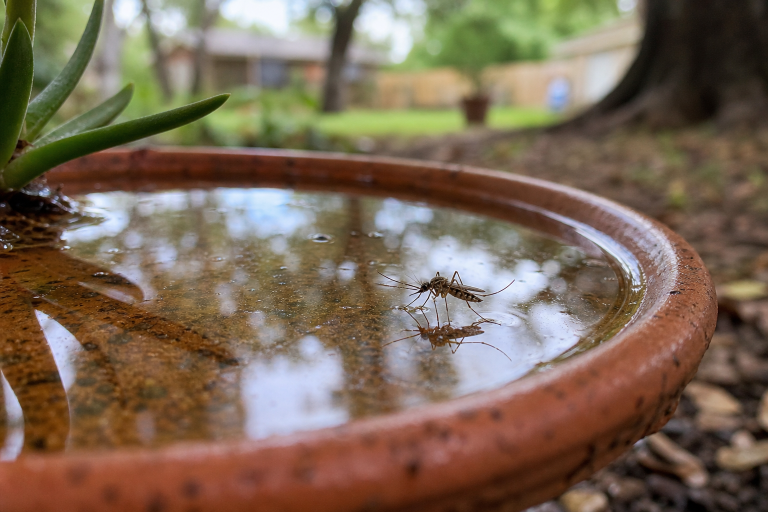
- Empty buckets, pots, toys, and other containers.
- Refresh birdbaths and outdoor pet bowls regularly.
- Clear leaves from gutters, downspouts, and drains.
- Repair dripping outdoor faucets and leaking hose connections.
- Improve drainage in low spots when practical.
How Heat Drives Pests Indoors
Extreme Texas heat can make sheltered, cooler, or damp areas more attractive to pests. Doors, window frames, plumbing penetrations, attic vents, garage seals, and utility openings can provide easy paths indoors. Activity near sinks, bathrooms, laundry rooms, water heaters, or air-conditioning equipment may indicate a moisture issue and an entry point.
Sealing a wall crack is useful, but it may not solve the problem if a leaking pipe, a damp cabinet, or a poorly draining area continues to supply water. Pair exclusion work with repairs that eliminate the reasons pests gather nearby.
Yard Habits That May Attract Pests
Landscaping does not have to be perfect to be pest-conscious. The goal is to reduce places where pests can hide, feed, or remain damp. Overgrown grass, dense ground cover, leaf piles, fallen fruit, thick mulch against siding, and firewood stored near the home can create convenient shelter. Outdoor pet food and leaky irrigation can add reliable food and water sources.
A 20-minute weekly yard reset can keep these conditions from building up:
- Walk the exterior of the home and check the foundation.
- Look for standing water, gaps, droppings, webs, and damaged screens.
- Move stored items and firewood away from exterior walls.
- Trim plants that touch siding, windows, gutters, or rooflines.
- Remove food scraps, fallen fruit, and unnecessary outdoor clutter.
A Simple Home Pest Checkup
Kitchen
- Store dry goods and pet food in sealed containers.
- Wipe crumbs and spills from counters, floors, and cabinet edges.
- Check under appliances for food debris, grease, and moisture.
- Empty indoor trash regularly and keep the lid closed.
Bathrooms And Laundry Rooms
- Look for dripping faucets, damp cabinets, and slow leaks.
- Inspect caulk around tubs, showers, and sinks.
- Check floor edges for moisture damage or soft materials.
- Use exhaust ventilation after showers when possible.
Garage And Attic Areas
- Reduce cardboard storage and keep boxes off the floor.
- Check the weather stripping around the garage door.
- Look for droppings, shed skins, nests, or damaged insulation.
- Seal openings around stored items, vents, and utility lines.
A Seasonal Prevention Plan
Spring
Inspect screens, doors, gutters, and drainage areas. Remove winter debris and watch for ants, mosquitoes, spiders, and termite activity after rain.
Summer
Check for standing water after storms, reduce outdoor food residue, and inspect shaded areas around hose bibs and air-conditioning equipment.
Fall
Seal gaps before cooler weather arrives, move firewood away from the home, and clear leaves from gutters and foundation areas.
Winter
Check warm indoor areas for hidden activity, repair plumbing leaks and condensation problems, and store food, birdseed, and pet supplies securely.
When Home Prevention Is Not Enough
Move beyond routine cleanup when pest activity continues after addressing food, water, and entry points. Other signs include droppings, nests, damaged materials, shed insect skins, activity in several rooms, repeated bites, or stinging-insect nests near doors and play areas. Mud tubes, wood damage, or winged insects near structural areas also deserve prompt attention.
Identify the pest before choosing a treatment. An incorrect guess can waste time and may allow the actual problem to spread into another room or a hidden area.
Common Questions About Texas Pest Activity
Why Do Pests Appear After Heavy Rain?
Rain can create breeding areas, disturb underground insects, and change the availability of food and shelter. Some pests respond by moving toward drier areas, including garages, wall voids, and indoor rooms.
Can A Clean Home Still Have Pests?
Yes. Good cleaning reduces food sources, but pests can still enter through small gaps, plumbing openings, damaged screens, nearby landscaping, and outdoor habitats.
How Often Should A Property Be Checked?
A quick weekly check is helpful during warm, wet periods. A more detailed inspection every few months can reveal moisture problems, structural gaps, and yard conditions early.
Are Mosquitoes Only A Summer Problem?
Mosquito activity commonly rises in warm weather, but local rainfall and standing water can affect activity outside the usual summer pattern. In North Texas, mosquito prevention advice from local public health officials also highlights repellents, protective clothing, the removal of standing water, and extra care around dawn and dusk.
Conclusion
Texas pest activity often follows simple patterns: warmth, moisture, shelter, and access to food. Homeowners cannot control the weather, but a short weekly yard check, prompt repairs, sealed food storage, and extra attention after rain can make a property less appealing to pests year-round.